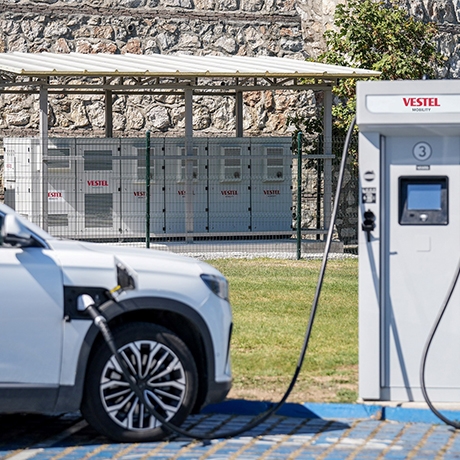
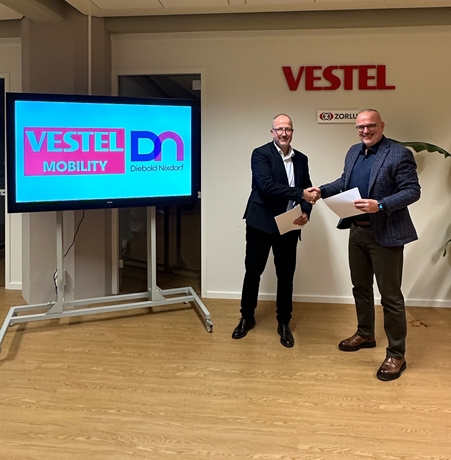
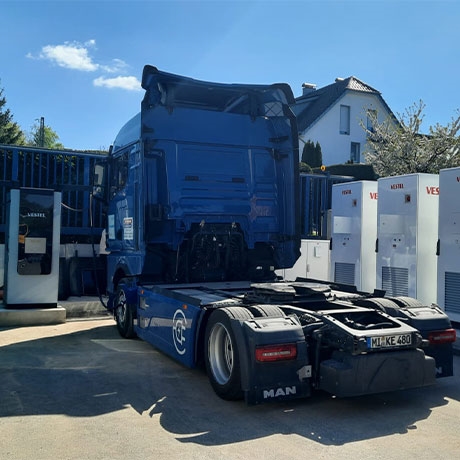
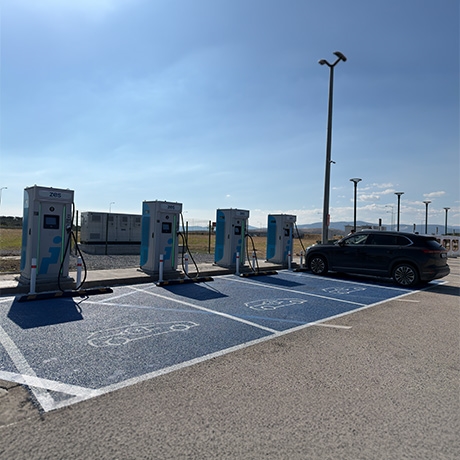
Delivered through collaboration between Zes, the investor and charging network operator, and Vestel Mobility, the technology and solution provider, the project integrates energy storage and intelligent energy management into Zes’s high-power charging services.
Growing demand for high-power electric vehicle charging is making more effective use of existing grid connection capacity increasingly important. At highway service facilities in particular, meeting simultaneous high-power charging demand from multiple vehicles can require additional investment in transformers and grid reinforcement.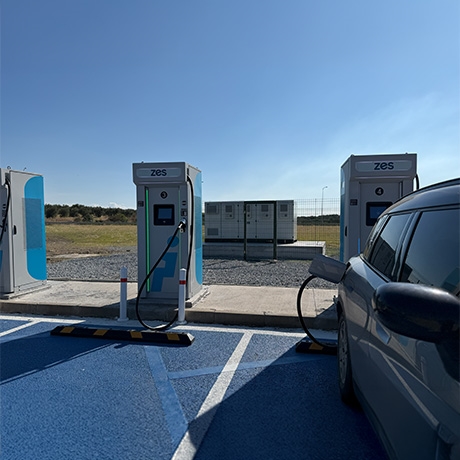
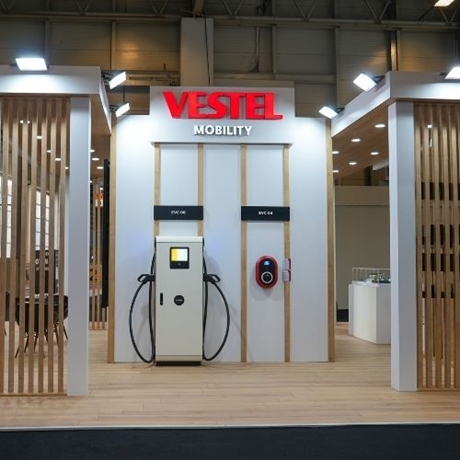
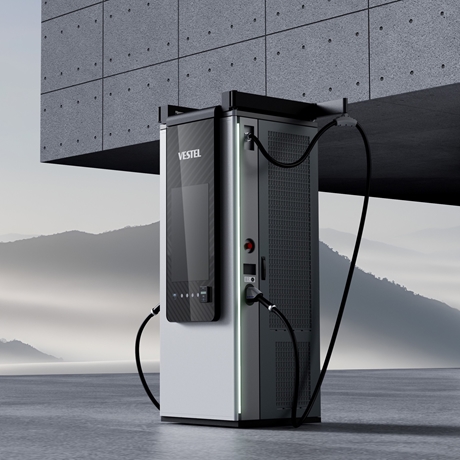
To address this need, Zes is supporting its charging services at the two Oksijen 320 facilities with Vestel Mobility’s battery energy storage systems and EMS solution. Vestel Mobility provides the project’s integrated, end-to-end technology solution, encompassing DC fast chargers, energy storage systems and EMS software.
Intelligent Management of 720 kW of Installed Charging Capacity with a 400 kW Grid Connection
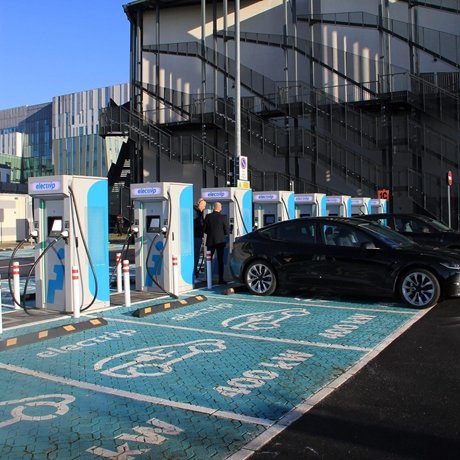
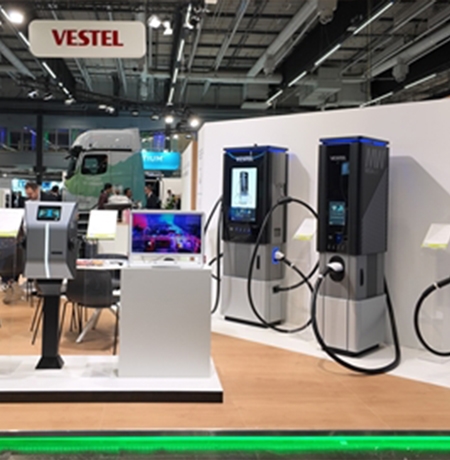
At each facility, four 180 kW Vestel Mobility EVC03-HP180C-UP DC fast chargers have been integrated with a 200 kW / 300 kWh Vestel Mobility Battery Energy Storage System (BESS) and the Vestel Mobility Energy Management System (EMS). This integration enhances the 720 kW of installed DC charging capacity operated by Zes at each facility through battery support and dynamic power management.
The system’s core approach is to dynamically manage the 400 kW grid connection limit and up to 200 kW of battery power support according to vehicles’ real-time charging needs, rather than operate all chargers at maximum power simultaneously. Depending on the battery’s state of charge and operating conditions, the grid and battery can together provide up to 600 kW.
The EMS monitors vehicles’ real-time charging demand and adjusts the power allocated to each charging connector within the limits of the available energy resources. When one vehicle’s power demand decreases, available power is redirected to other connectors. When total charging demand rises, the BESS provides additional power to the charging infrastructure.
This approach is also consistent with the smart charging provisions added to Article 19 of the Charging Service Regulation through the amendment dated 23 March 2026 issued by Türkiye’s Energy Market Regulatory Authority (EPDK). The amendment allows smart charging systems to be implemented at charging stations to enable efficient and effective use of total available power.
Battery support therefore improves the utilisation of Zes’s charging infrastructure during periods of high demand while maintaining the existing grid connection limits.
Project Technical Specifications — Per Facility
|
System Component |
Technical Specification |
|
Location |
Oksijen 320 facilities on both sides of the highway in Akhisar, Manisa |
|
Investor and charging network operator |
Zes |
|
Technology and solution provider |
Vestel Mobility |
|
Grid connection limit |
400 kW |
|
DC fast chargers |
4 × 180 kW |
|
EVC model |
EVC03-HP180C-UP |
|
Total installed DC charging capacity |
720 kW |
|
BESS power rating |
200 kW |
|
BESS energy capacity |
300 kWh |
|
Energy management |
Vestel Mobility EMS |
|
Control approach |
Connector-level dynamic power management and battery energy management |
Dynamic Power Management and End-to-End Control from the Grid to the Charging Connector
A key technological capability of the project is the Vestel Mobility EMS’s ability to manage the grid connection, energy storage system and charging connectors in real time through a single control architecture.
Vestel Mobility EMS continuously monitors grid power consumption, real-time charging demand and available battery power, responding rapidly to changes in the system’s power requirements.
When multiple vehicles simultaneously request high charging power, the EMS delivers the necessary additional power from the battery system while respecting the grid connection limit. As charging demand falls, it dynamically reduces battery power support.
The system also provides connector-level dynamic power management, known as Plug-Based Dynamic Power Management. When a connected vehicle’s power demand decreases due to its battery state of charge or vehicle-specific limitations, the available power can be redirected to other connectors. Power is therefore allocated according to vehicles’ real-time needs rather than divided into fixed shares among chargers.
By combining real-time battery power support with dynamic control of charging connectors, Vestel Mobility EMS aims to maximise the operational value of limited grid capacity. This approach provides Zes with operational flexibility at highway locations where high-power charging demand fluctuates.
Integrated Energy Management and Safe Operation
In addition to dynamic power sharing, Vestel Mobility EMS combines control functions for maintaining grid connection limits, managing battery energy and supporting safe system operation.
The Grid Import Limitation function continuously monitors power drawn from the grid and keeps it within the specified connection limit. Zero Export control is designed to prevent unintended power export from the energy storage system to the grid.
The EMS also optimises battery power support by considering the battery’s state of charge (SOC), real-time charge and discharge limits, and available energy capacity. Battery recharging during periods of low charging demand is managed within the available grid capacity.
If battery support becomes unavailable, operating limits are reached or communication is lost, coordination between the EMS and EVC ensures that charging power is limited to safe operating levels. These control functions work alongside the BMS and independent electrical protection systems.
Vestel Mobility EMS thus provides an integrated energy management solution that responds rapidly to changing power demand and supports the safe and efficient operation of Zes’s charging infrastructure.
Integrated Energy Solutions for the Future of Mobility
The Oksijen 320 deployments, with Zes as the investor and charging network operator, serve as a field reference for Vestel Mobility’s integrated solution, bringing together its chargers, energy storage systems and EMS software.
Building on the experience gained through this project, Vestel Mobility continues to develop integrated energy storage and charging technologies tailored to the needs of investors and charging network operators in Türkiye and Europe.
Please contact us to learn more about our solutions, project references and collaboration opportunities.